Multicultural exchange: Looking at SDG issues from the perspective of social norms of different countries #2

The second post is WAVE!

                               Impacts of Thai Social Norms on SDGs

                                            Pannasit Mee-in (Wave)

Hello Everyone, I am Wave from Thailand. Today, all members will explore and
discuss how Thai culture and social norms impact the Sustainable Development
Goals: Zero Hunger and Quality Education.

Content:
In Thailand, 94% of the population is Buddhist, and our King also represents the
Buddhists. We have various holidays related to the royal family’s birthdays and
Buddhism.

1. Buddhist Tradition helps “Zero Hunger.”
There are a few Buddhist practices related to donation and doing good; for example:
● Giving alms to the monks
● Men temporarily become monks to do good deeds for their families
● Donating money to the temple
● Going to the temple on Buddhist days to listen to sermons, pray, and have a
meal with other participants.
When we have a meal together on Buddhist days, people in hunger can participate
by listening to the sermon, praying, and then having the food for free. It is a Buddhist
tradition to share food and help others, so it can temporarily solve the hunger
problem for those who go to the temple.

2. Government Policy to Promote “Quality Education”
There is a disparity in the education system in Thailand.
● Richer people usually have access to better education.
● Free education in public schools generally has lower quality teaching facilities,
leading to a worse educational environment, such as no whiteboards or
sufficient student tables and chairs.
The government is trying to help a portion of people by providing scholarships. In my
opinion, it can help some groups of people who work hard; however, students who
do not have enough time to study and have to help their families with work scarcely
have any chance of earning this scholarship.

Questions Time:
Q: Are there any privileges for becoming a monk in Thailand?
A: Not much in terms of education, but Thai people tend to respect monks, especially
the older generation.

Q: What are the reasons people become monks, especially at 20?
A: Monks are seen as people who bring good luck and good things to the family in
Thai Buddhist belief. Tom added that it is not necessary to become a monk at 20, but
it is more important to become a monk once in a lifetime.

Q: What do you have to do to become a monk?
A: Celebrate by donating food and money to the temple and shaving the head of the
guy who is becoming a monk.

Q: Is the King in Thailand related to Buddhism?
A: Yes, he is. He also has the palace decorated in a Buddhist style.

Q: Do all monks have muscles?
A: No, but I chose the image of a muscular one so that the presentation becomes
funny.

Q: How to donate money to the temple, and can people from other religions
donate?
A: There is a donation box inside the temple, but if you are donating a large amount,
there will be a paper to fill out, and you can get a certificate for that. Anyone can
donate because the temple does not care who you are. They like donations!

Q: What services do people get from the temple?
A: People can become a monk to study Buddhism. Sometimes, the homeless can
ask the monks to temporarily stay in the temple while helping with the temple’s work,
such as cleaning and carrying alms monks received from people.

Discussion:
● The temples in Malaysia often have homeless people sojourn around, so they
can get some donations from passersby that are different from Thailand.
● In Colombia, there is no culture of staying in the temple unlike in Thailand
where many homeless people go to temporarily stay.
● In China, some monks are required to have a master’s degree before
becoming one, and they normally become monks all their lives, not just
temporarily like Thai Buddhists.

It was a fun activity to share my Thai culture while learning about the differences with
other cultures. Thank you for reading my blog, see you next time.

Multicultural exchange: Looking at SDG issues from the perspective of social norms of different countries #1

The Abe Research Group holds a general seminar once a week in the first quarter and each member shares her/his work-in-progress trough presentation.

As a complementary activity to the general seminar, there is another session where each member chooses which SDG goal to focus on and which social norm in their countries of interest. We will post our presentation in order.

The first presentation is by Hugo.

Strikes and Riots in France

Why Strikes and protests are a French Cultural Norms? Especially, how we use them to achieve the SDGs?

Hugo BOURGEAIS

RESUME:

France is internationally known for her numerous strikes and violent protests. In this report, I will develop the reason why French people strikes and what are the raisons.

Historically, my people are popular to have revolutionary spirit, as testify the storming of the Bastille or the execution of some of our kings such Louis XVI. Thanks to these events and because it is nowadays in our nature, the Right of Strikes began a constitutional right in 1971. That means that, under some circumstances, you can freely go on strikes during your workdays and protest without seeing your wage decreased.

Strikes are a tool to protest against the Government or claim social/societal issues. I personally identify 3 themes of strikes: Labor (related to work conditions), Social (like BLM or related to climate) or against the Government. Thus, France is the “most striker” country of the world [1] (before Danmark and Belgium) and is reputed for her recurrent strikes turning in riots.

Concerning SDGs settled by the United Nation, each goal may be related to Strikes because, in my mind, French go down in the street each time there are dissatisfied. However, the most representing goals could be the 13. Climate Action, 5. Gender Equality, 10. Reduced Inequalities, 16. Peace, Justice, and Strong Institutions and 8. Decent Work and Economic Growth.

As presented during the presentation, there are two possible issues of a strikes: relevant and irrelevant/destructive.
For instance, in the “Yellow vests protests”, people have fought because of economic inequality (SDGs 8 and 10) since October 2018. Because of the magnitude of these strikes, the Government undertaken a lot of actions to satisfy the requirements desired. This movement is definitively beneficial for the society.

Whereas, due to the shooting of Nahel (17 y.o.) after a road trip with the police, France faced violent riots against police violence and racism mid-2023 (SDGs 16). The consequences were disastrous: 1 billion euros of damage, lots of building destructed such banks, hometown, schools, shops [2]… In this second situation, the damage was considerable, a lot of people were wounded (including police and young rioters) and the trial of the policeman was postponed. Those events divided the population. Even if the substance may be good, the form has made the movement a shame and has made the conflict worse.

DISCUSSION:

Do people protest in your country? How?
What were the most important last strikes in your country? Why?

      In Thailand, people could be afraid to go on strike and they rarely turn violent because police are allowed to reply violently. Similarly, in Laos, it seems hard to create similar movement because of a certain overcontrol of the population through social medias inter alia.

      In Japan, due to the Japanese shy temper, people do not used to strike. Social movements mainly happen through social networks as X or Instagram for instance.

      In China, strikes do not happen so often neither because it is quite hard to launch a social movement with the current system. Besides, people used to believe in the government to solve social issues.

      The most recent markable strikes in Malaysia were between ~2007 and ~2014 and treated suspicions of unfair/corrupted elections. Indeed, the same party had been elected for a so long time that people started thinking there were frauds somewhere. Nowadays, it is tricky to know if the situation has really changed. For Philippines, massive protests happened because of a violent and military dictatorship which used to get people killed without trials when there were opponents to the Government. For these two countries, you need to declare the strike in a government office to insure a good management of the event.

      In Indonesia, there was a general strike concerning a new government’s bill dealing many subjects: labor, environment, and freedom of speech on internet. Despite the movement, nothing changed: the government continued to apply what they wanted. In France, hopefully, most important strikes are followed by actions to satisfy as they can strikers.

      In Colombia and America Latina in general, most of the strikes easily turn into riots and the damage are always important in addition to be without any improvement. So, what will be keys to do a good demonstration? Also, should we think that strikes are mainly addressed to poorer people?

In my mind, a good demonstration is a demonstration which is long enough and count enough people to make the government says: “oh okay, maybe we are doing something wrong because our people are not following us”. But it should be non-violent, otherwise, every effort put in so far will be vanished by these bad actions.
Concerning the people concerned by strikes, some SDGs are definitively more related to poor population, but when it concerns social aspect such Peace, Gender Equality or Climate Change, no need to be rich or poor to feel involved by the cause.

[1] Tristan GAUDINOT (April 30, 2021). Dans quels pays fait-on le plus la grève?. fr.statista.com. https://fr.statista.com/infographie/4953/nombre-de-jours-de-travail-perdus-pour-fait-de-greve-pour-1000-salaries-par-pays/

[2] James REGAN, BLOOMBERG (2023). French riots have cost $1.1 billion in damage to businesses and travelers are even canceling their vacation plans. Fortune.com. https://fortune.com/europe/2023/07/04/french-riots-business-cost-travel-holiday-cancelations/

Two new members and a final IRP presentation

Some update about our group.

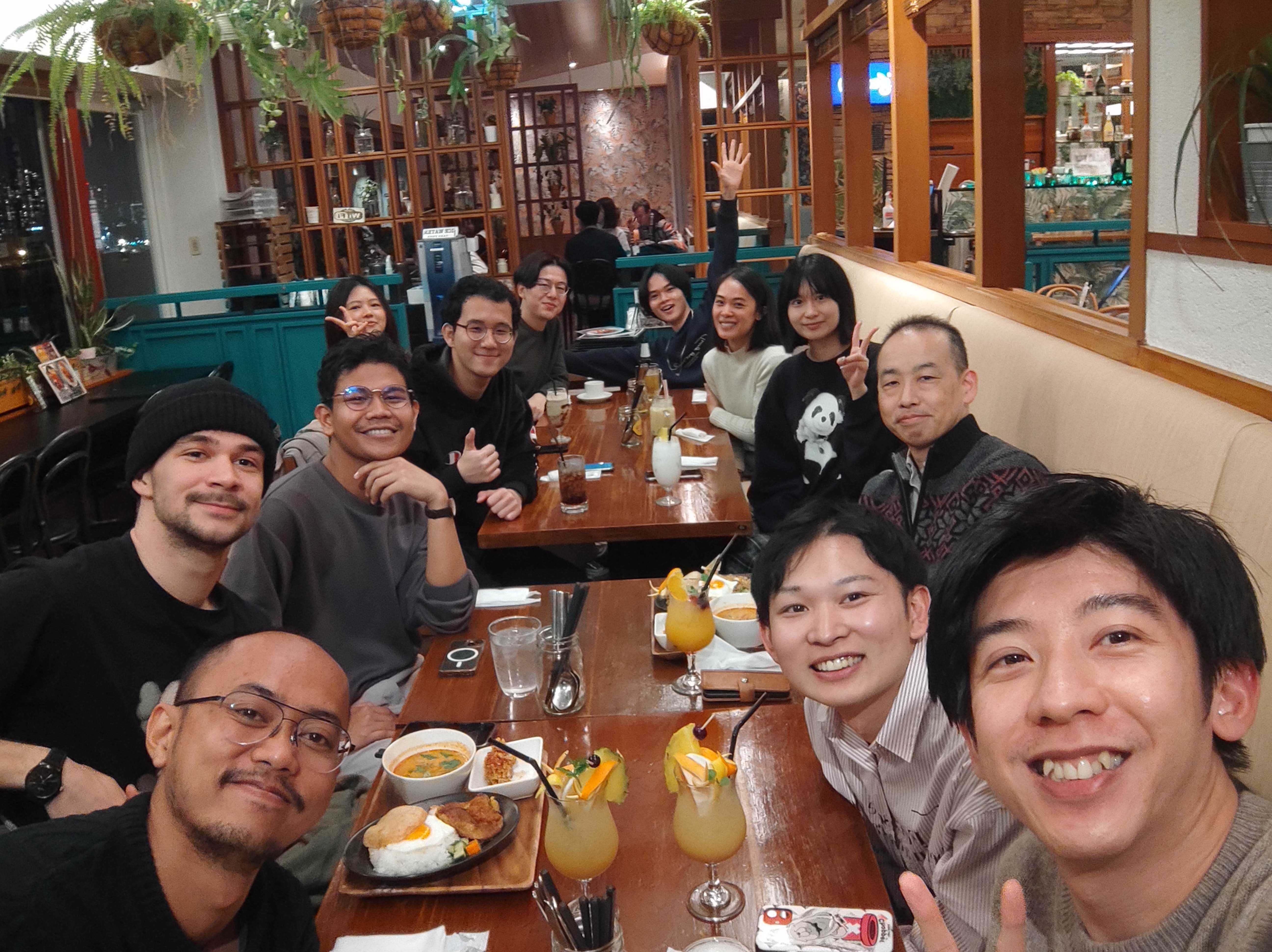
Two new members have joined to our group, Wave and Zhihang since last December 2023 and we had the welcome gathering at Odaiba, Tokyo.  I very much look forward to working with them!

Welcome gathering for Wave and Zhihang


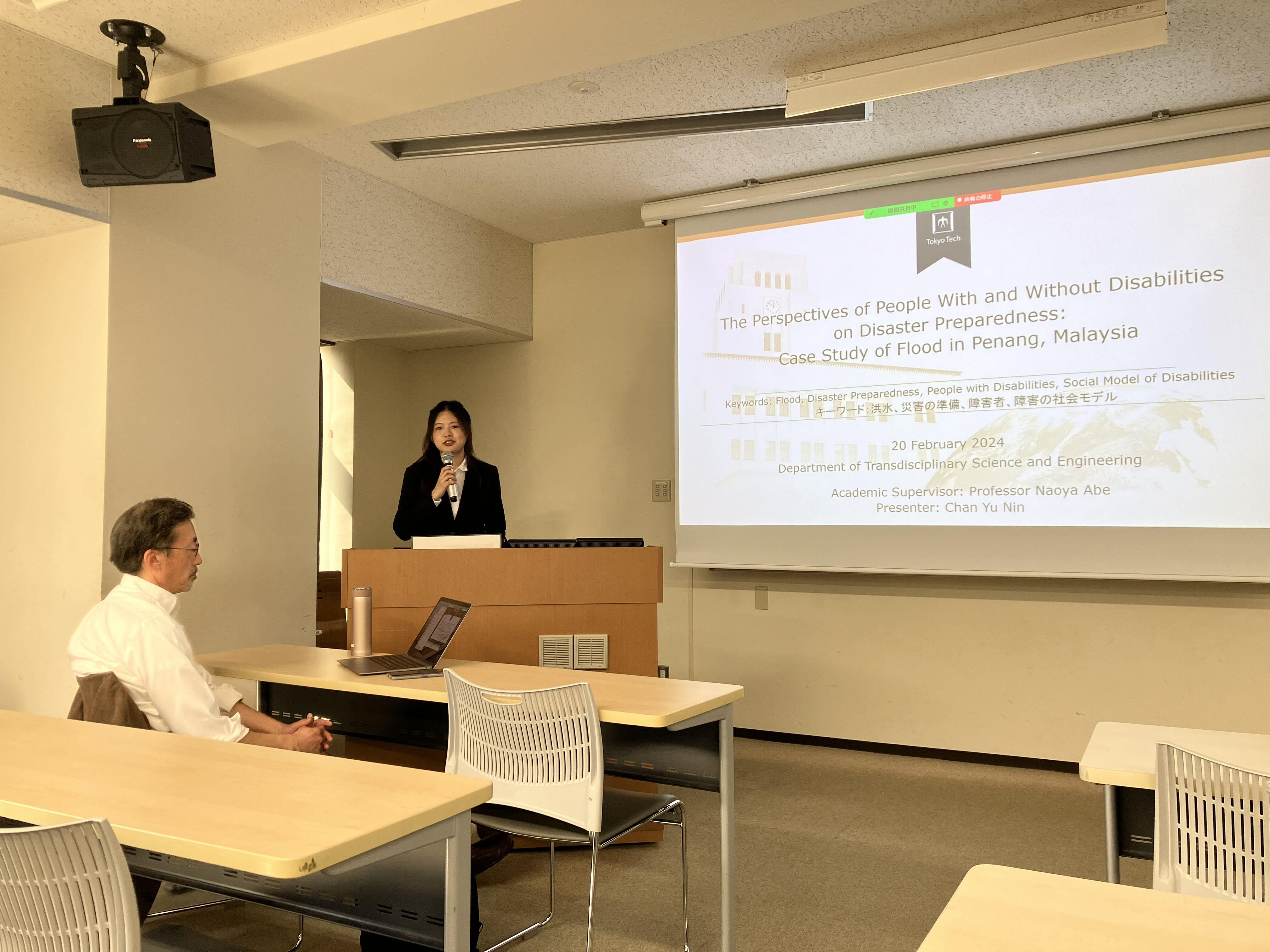
Yu Nin successfully completed the final presentation of her Independent Research Project in February this year. She is one of the students who was severely affected by the pandemic and could not come to Japan for months. It must have been a series of difficult experiences in the first two years of student life at Tokyo Tech (and hopefully a good amount of unique and positive experiences in the past four years as well) It was very emotional to watch her final presentation, which was done smoothly and very well!

Final presentation by Yu Nin

Book review #6 -Summary of Book Review-

Book review #6 Summary of Book Review by Kota Takahashi

***********************************************

Today’s contents

①[Review Parts3 and Part4]

②[Discussion]

***********************************************

①[Review Parts3 and Part4]

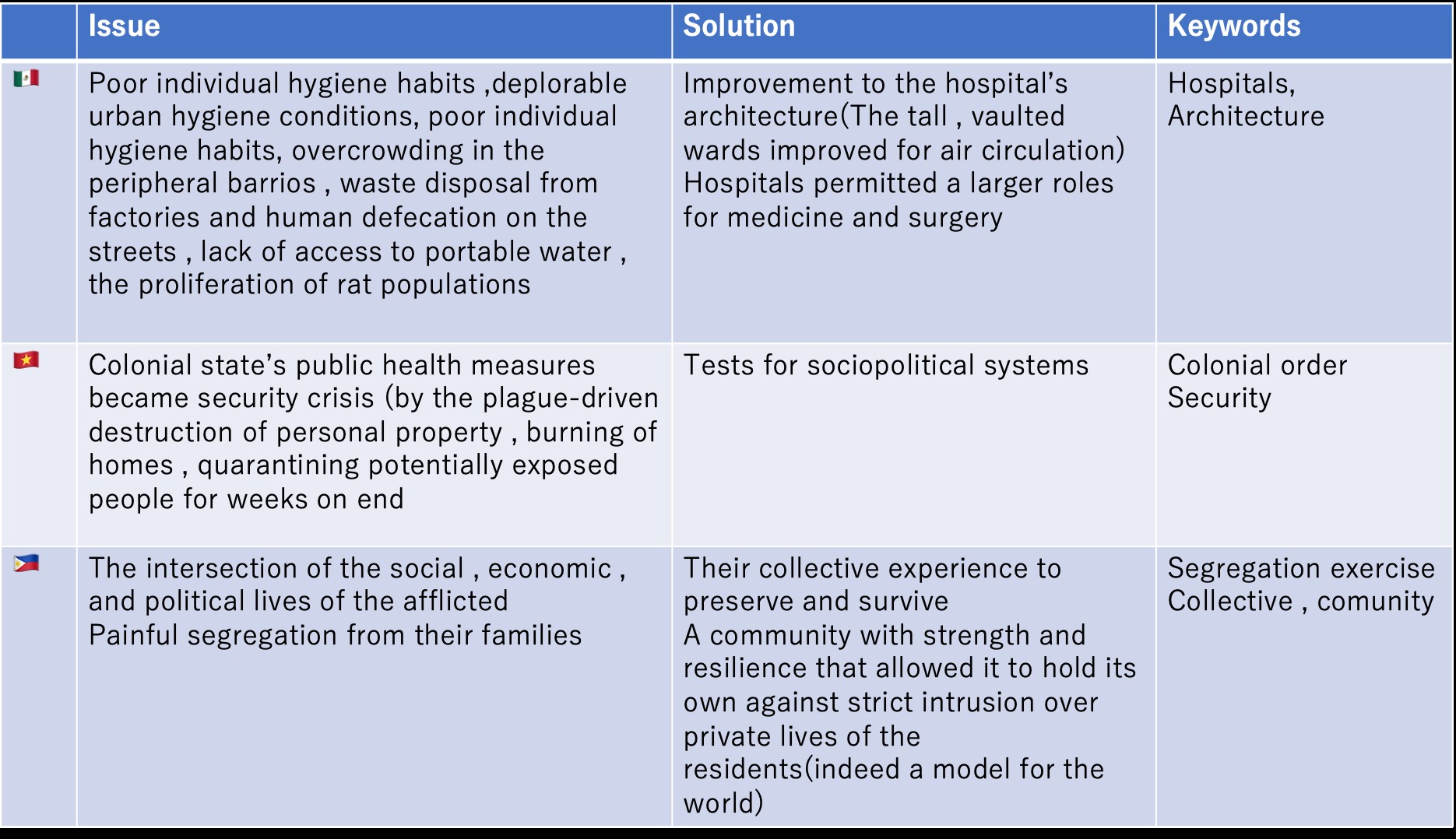
Part3 Urban Infrastructure

<3 case studies>

Puebla, Mexico (Plague, 1737) 🇲🇽
Hanoi , Vietnam (Plague, 1885-1910) 🇻🇳
Culion Island , The Philippines  (Leoprosy, 1898-1941) 🇵🇭


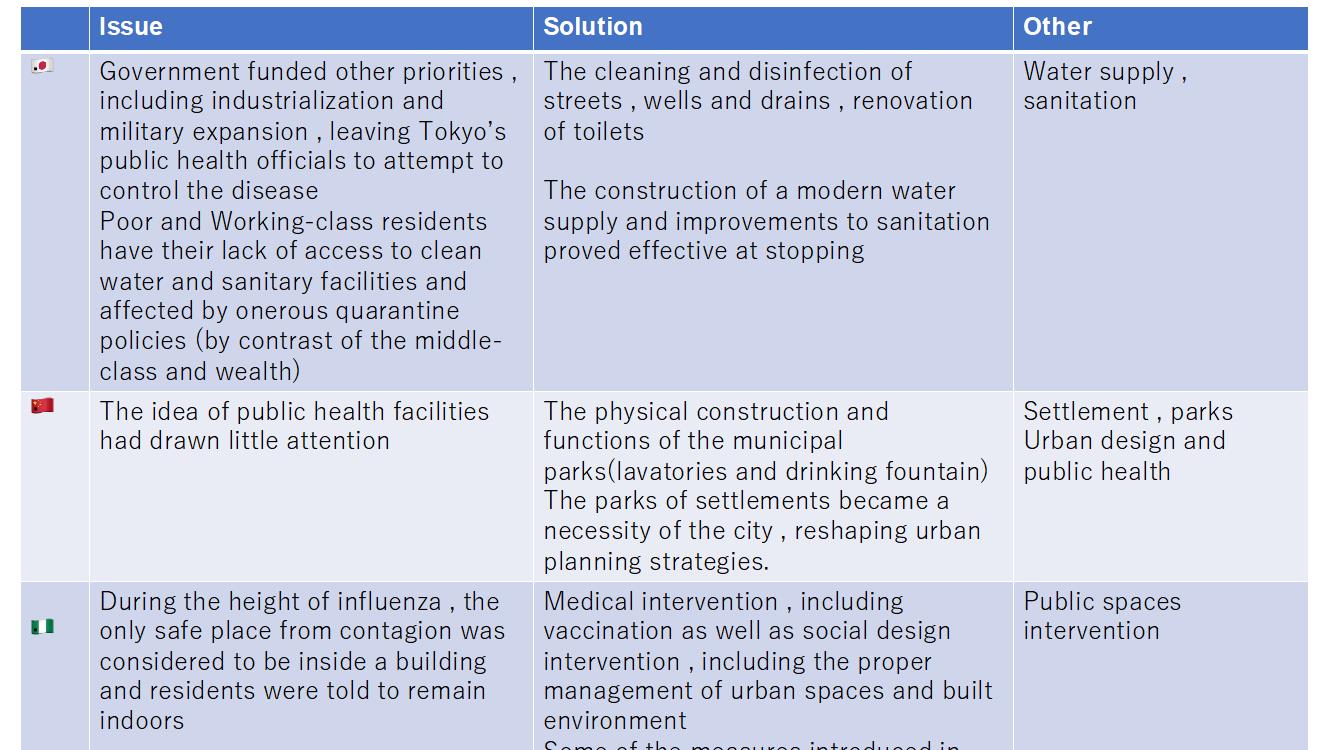
PART 4  Urban Design And Planning

<3 case studies>

Tokyo, Japan (Cholera, 1877-95) 🇯🇵
Shanghai and Tianjin, China (Plague, 1894)🇨🇳
Lagos, Nigeria (Influenza, 1918) 🇳🇬


②[Discussion]

  1. What are the most important commonalities for urban infrastructure? (🇲🇽🇻🇳🇵🇭)

Physical, political, community


  1. What are the important commonalities for urban design and planning? (🇯🇵🇨🇳🇳🇬)

Environment, accessibility, population density


  1. After we read this book, how do you apply what you learned in this book to your research topic or interested in the future?

(1) Major: Tourism

I have studied chemistry and physics before, so It’s first time I study about urban infrastructure or urban planning in detail. I found that activating tourism has something with urban planning because some images of attractions like heritage sites we travel change by urban planning deeply. I got to be interested in urban planning more in the process of researching tourism.


(2) Since I am conducting research on multicultural communities, understanding the transformation of urban areas following infectious diseases may provide insights into the cultural shifts that have occurred and the reasons behind the concentration of foreigners in those areas. Additionally, knowledge of government policies implemented in response to the spread of infectious diseases can assist me in developing more effective strategies and policies to promote environmental behavior in multicultural communities.


(3) I think its not directly related to my research about awareness of athletes, but I think the closest it relates to is about the previous chapters we discussed, about governance and society. We learned about how good governance tackled pandemics and it can be related to sports organizations making good guidelines and plans to make sports events more sustainable. Additionally, since the society impacted the government also, it can be related to the environmental awareness of athletes to impact sports organizations and maybe even the fans of sports。


(4) Major: urban development and solid waste management

It is related especially in the aspect of history and multiperspective approach. The historical approach used on the book helped us understand things happened in the past and how we can learn from that. As for the multiperspective approach, it is related to research I’m doing right now where I try to understand how different types of urban issues affect solid waste management, so multiperspective and different point of view are needed.


(5) This book provides valuable perspectives on historical pandemics and illuminates the neglect of infrastructure and vulnerable communities. Additionally, it delves into the fascinating history of plagues and cities, which assists us in understanding the challenges we face in the present and future. Notably, the recent covid-19 pandemic exemplifies how we have applied the knowledge gained from past experiences to adapt to the current circumstances, such as quarantine and blocking areas at risk of an outbreak.


(6)  Major: Disaster risk management

I believe that this book is directly related to my field of interest. Throughout reading about different aspects of epidemic urbanism, I think that it has widened my perspective on looking at issues in disaster management. In this book, we have learned from case studies that epidemics can affect a region in terms of governance, urban infrastructure, culture, urban planning, and etc. Therefore, I think that it was interesting that I can reflect these ideas to disaster risk management and have a better grasp on the disaster issues happening around the world.

Book review #5, Urban Design And Planning: Interventions and Implications

Epidemic Urbanism: Contagious Diseases in Global Cities
Part 4: Urban Design And Planning: Interventions and Implications


Case studies presented:

  • Chapter30: Public Health, Urban Development, and Cholera in Tokyo, Japan, 1877-95
  • Chapter31: The Hong Kong Plague and Public Parks in the British Settlements of Shanghai and Tianjin, China, 1894
  • Chapter35: Urban Transformation and Public Hearth Policies in Post-Influenza Lagos, Nigeria, 1918

Date presented: 26th June 2023
Presenter: Kazuki Hirabayashi


Chapter30: Public Health, Urban Development, and Cholera in Tokyo, Japan, 1877-95

In the late 19th century, Japan experienced a devastating cholera epidemic that claimed the lives of over 360,000 people across the country, with Tokyo being severely affected. Tokyo accounted for more than 11% of all cases, despite its population representing only 3.2% of the total population. The government’s objective was to comprehend the factors contributing to the spread of cholera in the city and develop policies for disease control.

Cholera is caused by Vibrio cholerae, a comma-shaped bacterium that originated in the warm waters of the Ganges Delta. Poor hygiene and inadequate sanitation practices facilitate the contamination or recontamination of water, serving as a vector for the widespread and easy transmission of the disease. Despite the detrimental role played by an aging water system and insufficient sanitation in the disease’s spread, the government was slow to take action in improving the city’s infrastructure.

The infection rate was particularly high in wards with dense populations and significant water pollution. In 1854, the British physician John Snow demonstrated that cholera spreads through water contaminated by human waste, and by 1871, this knowledge had reached Japan. This understanding reinforced growing concerns about drinking water and sanitation in Tokyo.

During the latter half of the 19th century, Tokyo continued to rely on an outdated water system established in the mid-17th century, namely the Kanda Waterworks and Tamagawa Waterworks. These waterworks supplied water that was heavily contaminated with organic matter due to waste flowing through canals and underground pipes throughout the city. However, due to the high costs involved in improving the water supply system, no significant improvements were possible without funding from the central government.

As the Japanese government prioritized military and industrial spending, Tokyo’s public health authorities responded to cholera by implementing restrictions on the daily activities of residents. These measures included addressing the manure trade, restricting waste collection and removal to nighttime, requiring waste buckets to be covered, replacing toilets with ceramic ones, regularly cleaning drains, roads, and garbage dumps, and prohibiting urination and washing clothes or dishes near public wells.

Another strategy involved isolating infected individuals in quarantine hospitals. By 1889, an improved system of “infectious disease hospitals” had emerged, but they were often located on the outskirts of the city, reflecting discrimination against the infected. Quarantine hospitals predominantly targeted poor and working-class residents, which fostered popular hostility towards the patients.

In conclusion, despite studies revealing the contamination of Tokyo’s water supply, little effort was made to address the underlying infrastructure issue. Instead, the government focused on regulating the behavior of urban residents to prevent the spread of the disease. This situation highlighted the social, economic, and material inequalities that influenced urban life, with working-class residents lacking access to clean water and sanitation and sometimes being forcibly transferred to isolation hospitals.


Chapter31: The Hong Kong Plague and Public Parks in the British Settlements of Shanghai and Tianjin, China, 1894

In 1894, the plague was spreading in Hong Kong, and the British settlements of Shanghai and Tianjin had strong trade connections with Hong Kong. British settlers in these settlements implemented their urban planning concepts and responded to the plague by importing public health and infrastructure ideas from Europe, including the creation of public parks.

Following the outbreak of the plague in Hong Kong, it was believed that parks could serve as a means to prevent diseases (as the British attributed diseases to the environment). Urban authorities utilized parks to promote changes in social practices that could endanger public health. For instance, in Chinese cities at the time, urine was commonly dumped directly into the streets, so lavatories were constructed in parks to address this issue.

In Shanghai, a public water system was introduced in 1883, and in Tianjin in 1898, aiming to enhance public health. As part of these improvements, public water fountains were installed in parks. Lavatories and water fountains gradually became standard features, and the overall design of public parks was enhanced. Public parks came to be recognized as crucial elements in maintaining public health and welfare.

During the early 20th century, with the extensive expansion of new urban developments, there were concerns among residents about the potential reoccurrence of the plague. In response, city councils actively promoted the construction of public parks in rapidly growing districts. In 1930, a European-style “park system” was introduced, ensuring that small parks were built within a certain distance from each resident’s residence.

In conclusion, British settlers brought European urban planning ideas to China through the establishment of parks. This included the introduction of lavatories and water fountains, gradually making parks an integral part of public health initiatives. Even after the plague epidemic subsided, the concept of a park system continued to influence urban planning and the lives of residents. Despite increasing land prices, small parks were constructed to improve the urban environment and provide ventilation.


Chapter35: Urban Transformation and Public Hearth Policies in Post-Influenza Lagos, Nigeria, 1918

The city of Lagos, situated on the southwestern tip of Nigeria, facing the Gulf of Guinea, served as the administrative center of the Nigerian government during the colonial period. It was annexed by the British Empire in 1861 and became a colony. The concentration of settlers in Lagos led to overcrowding, both in terms of sites and dwellings, which contributed to poor sanitary conditions.

The influenza epidemic of 1918-19 was one of the deadliest in history, claiming the lives of 50 to 100 million people worldwide. In Lagos, the lack of accurate information and the dissemination of misinformation by the colonial government facilitated the spread of the disease. Additionally, the colonial government prioritized its efforts towards World War I instead of focusing on combating the epidemic.

The colonial government estimated the number of deaths based on death registers maintained by local government offices. According to a 1918 report, an estimated 1.5% of the Lagos population succumbed to the disease, with a higher mortality rate observed among the poor and illiterate segments of society (Table 1).
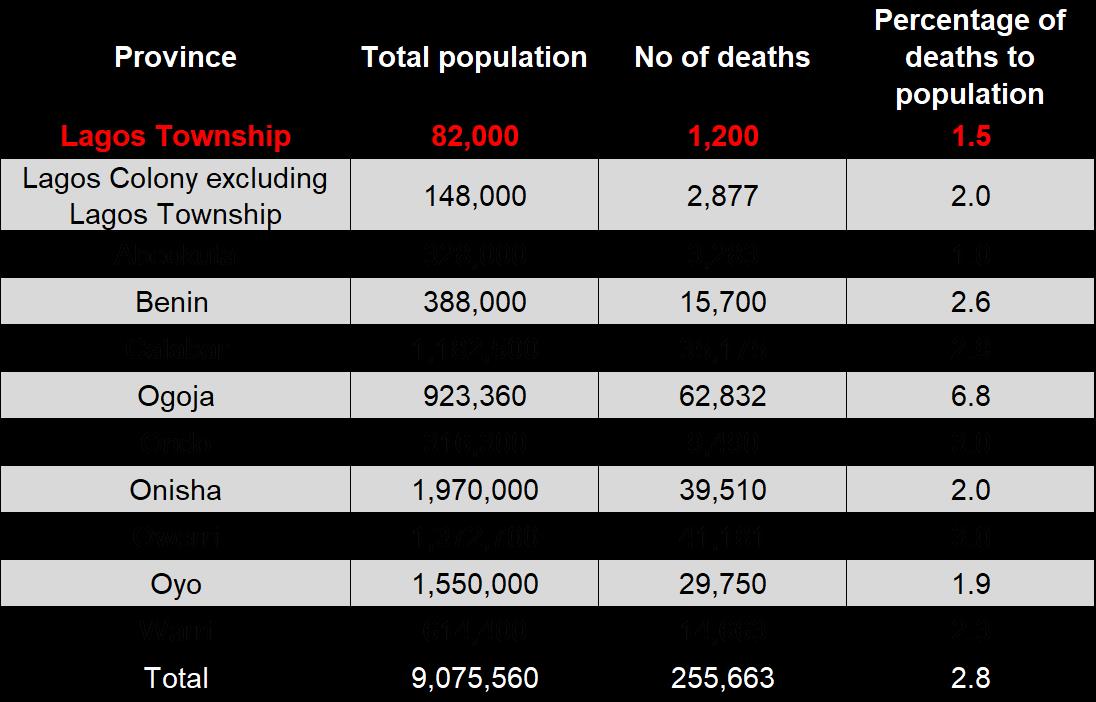
Table1: Death records of the colonial government in Lagos colony and other southern states between 1918-19

As a response to the influenza epidemic, schools, stores, and public places were closed. The authorities implemented sanitation reforms, including the introduction of piped water supply, urban planning measures, wetland reclamation, drainage improvements, and the enactment of public health ordinances and regulations. Medical and insurance services were also expanded, resulting in a significant increase in the number of medical staff. A network of local pharmacies staffed with indigenous doctors and nurses was established, and elementary hygiene education was provided in large town schools under the supervision of government officials.

Furthermore, various segregation schemes were implemented in the settlement, some of which still persist today. British settlers were segregated from the indigenous population into Government Reserves (GRA). The challenge of ensuring adequate housing and infrastructure for Nigeria’s people remains unresolved.

In conclusion, epidemics had a profound impact on Nigerian society and its built environment. Urban sanitation reforms were implemented only after the epidemic had already spread extensively. Although the pandemic could have been contained without government intervention, it would have taken longer and resulted in more infections and deaths. In Nigeria, the disease was largely left untreated, leading to a significant loss of life. However, significant progress has been made in implementing health measures in different regions of Nigeria.


Lesson learned

  • Even in the midst of an epidemic, other policies may be prioritized over sanitation policies due to circumstances or funding difficulties. However, inadequate sanitation policies slow the control of infectious diseases and increase the number of victims.
  • Epidemic outbreaks provide an opportunity to improve health services, infrastructure, and urban planning.
  • Social and economic inequalities worsen the effects of epidemics. Therefore, ensuring equitable distribution of resources is important in promoting public health.


Discussion

  • By drawing lessons from the history of epidemics, new public health measures can be incorporated into the system, and future occurrences of similar cases can be predicted.
  • One reason why children may lack knowledge about public health is the absence of parental education on the subject. Therefore, including “hygiene education” in the school curriculum can aid in public health measures. Additionally, ensuring accessibility to soap and other hygiene products is crucial for emphasizing the importance of handwashing. Furthermore, adopting a more comprehensive approach, similar to the BOP (Bottom of the Pyramid) business model, can encompass easy access to sanitary products while considering the reduced environmental impact associated with their disposal.
  • While public parks play a significant role in sanitation measures, facilities such as athletic fields, soccer fields, and tennis courts are also vital for promoting health by enabling people to participate in sports and physical activities. Regular physical activity strengthens the immune system and may help prevent infectious diseases.
  • Community organizations are essential, particularly during epidemics when misinformation can circulate. In such situations, having a connected community and a reliable source of information, such as the government, can reduce confusion by facilitating the dissemination of accurate information within the community.
  • Given the impact of public health on human resources, it should be a top priority when allocating government budgets. It is important to note that sanitation measures benefit a large number of citizens. However, in cities strongly influenced by those in power, the authorities may prioritize other policies based on their personal concerns. Unfortunately, significant decisions often tend to be made only in response to major events. In other words, progress is slow without a triggering event, whereas action is swift when a significant incident occurs.


Reference

Gharipour, M., & DeClercq, C. (Eds.). (2021). Epidemic Urbanism: Contagious Diseases in Global Cities. Intellect Book. pp.240-320.